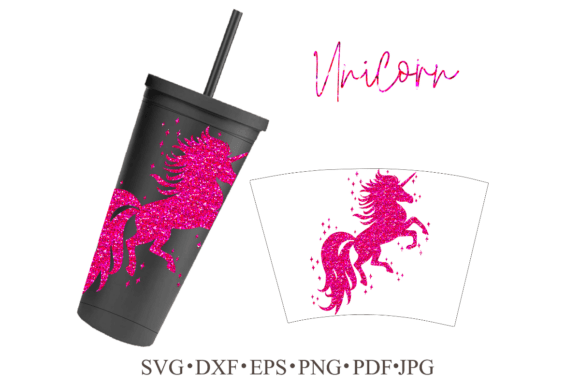
Unicorn in Star Wrap for Cap 22 OZ: A Practical Review
Every so often, a design lands on my screen that makes me pause and mentally scroll through my entire project queue. The Unicorn in Star Wrap for Cap 22 OZ is one of those. It’s not a stitched‑out embroidery file sent straight to the machine — it’s a graphics bundle, a digital illustration that begs to be turned into something tactile. As someone who has digitized hundreds of whimsical designs for handmade businesses, I immediately saw the potential here, but also the quiet caveats that only real‑world testing can reveal.
The mood is pure storybook magic. A sleepy‑eyed unicorn nestles inside a pointed star wrap, the whole composition radiating a gentle, celestial charm. It’s the kind of motif that makes you think of nursery walls, baby shower gifts, and boutique window displays. But before I’d trust it on a 22‑ounce cold cup, a baseball cap, or a toddler’s sweatshirt, I needed to look past the cuteness and into the stitch‑friendly bones of the design.
First Look at the Design Layout and Character
The composition is surprisingly balanced for a wrap‑style graphic. The unicorn sits centrally, its mane flowing in soft curves, the horn a tiny spiral that reads clearly even at a glance. The star wrap frames the character without crowding it, the points extending outward in a way that would naturally hug the curve of a cup or the crown of a cap. The face is simplified — a closed eye, a small muzzle, a hint of a smile — which works in its favor when you start thinking about thread and fabric. Over‑detailed faces are the enemy of clean embroidery, and this one avoids that trap.
What struck me immediately was the versatility of the silhouette. The star wrap isn’t just a decorative border; it creates a natural boundary for appliqué or a filled satin stitch area. The negative space inside the star points could be left open or filled with a light fill stitch, depending on the look you want. For an embroidery designer, that kind of structure is a gift.
Translating the Graphic Into Stitching Reality
Let’s be clear: this is not a machine embroidery design file. What you receive is a set of graphics — SVG, PNG, JPG, DXF, EPS, and PDF — which means you’ll need to digitize it yourself or turn it into an embroidery pattern. The presence of an SVG is a huge plus for digitizers. Vector paths can be imported directly into embroidery software, giving you clean outlines to work with. The PNG and JPG are perfect for mockups, previews, and showing clients what the finished product might look like on a tote bag or a cap.
I loaded the SVG into my digitizing software and immediately traced the main shapes. The star wrap’s lines were crisp, the unicorn’s body a smooth curve. The only area that needed careful attention was the eye and the horn. At the size intended for a 22‑ounce cup wrap, the details are large enough to stitch cleanly. But if you plan to shrink this down for a baby onesie or a patch, you’ll need to simplify those tiny elements. A single‑strand running stitch for the eye can work, while the horn might need to be enlarged slightly or replaced with a straight satin stitch.
Real‑Life Project: A Custom Baby Blanket
I put the Unicorn in Star Wrap for Cap 22 OZ to the test on a personal project — a personalized baby blanket for a client’s newborn. The request was for something magical but not overly sparkly, something that would age well. I digitized the design at about five inches wide, using a combination of satin stitch for the star outline and a light fill stitch for the unicorn’s body. The mane was done in a soft running stitch to give it a textured, hand‑drawn feel.
On a plush cotton minky fabric, the star held its shape beautifully. The points didn’t distort, and the wrap’s curve looked intentional even when laid flat. The unicorn’s face stitched out cleanly because I had enlarged the eye just a fraction during digitizing. The client’s reaction was immediate and emotional — exactly the response you want for a handmade gift. That experience confirmed that this design, when interpreted thoughtfully, can carry a product from “nice” to “heirloom.”
Where This Design Shines in Handmade Products
The Unicorn in Star Wrap is not limited to cold cups and caps. In fact, its strongest suit is how easily it adapts to flat and gently curved surfaces. I can see it thriving on a unisex sweatshirt, positioned off‑center, or on the front of a canvas tote bag. The star wrap frames the unicorn so well that it functions as a standalone sticker‑style design on aprons, pillow covers, and tea towels. For Etsy sellers, this is a listing you can build an entire product line around — nursery decor, birthday shirts, personalized holiday gifts, and even embroidered patches for jean jackets.
Because the design already looks like a finished illustration, it works wonderfully for digital product previews. A crisp PNG file placed on a mockup of a cap or a cup can sell the product before you even stitch a single sample. That’s a practical advantage for small business owners who need to test market interest before committing to production.
Fabric and Surface Considerations
As with any design that has defined points and enclosed shapes, your fabric choice matters. Smooth, tightly woven cottons and canvases let the star’s geometry shine. On textured fabrics like terry cloth or heavily brushed fleece, the fine points of the star might lose definition, even with a stabilizer. I’d avoid thin, stretchy fabrics unless you’re willing to use a firm cutaway stabilizer and a dense underlay. On dark fabrics, the design’s soft, pastel personality might need a thread color adjustment — a slightly brighter pink or lavender can keep the unicorn from fading into the background. For caps, the curved surface means you’ll need to hoop carefully and possibly use a special cap frame. The star wrap’s shape is forgiving, though; it naturally bends with the curve, which is a thoughtful detail in the original layout.
Digging Into the Digital File Bundle
The product listing promises a full set: SVG, PNG, JPG, DXF, EPS, and PDF. This is a generous spread for a graphics package. The SVG is your digitizing workhorse. The DXF might open doors for laser cutting or vinyl work if you’re into mixed media. The EPS is ideal for professional printing or scaling without loss. The PDF is likely a preview or a color guide — always worth checking. The one thing I noticed was the incomplete warning in the description: “WARNING BEFORE PURCHA.” It’s cut off, which means you should open the full product page and read the terms carefully. You need to know if commercial use is allowed, if you can sell finished products with this design, and if the license covers digital products. I always recommend reaching out to the seller if anything is unclear.
Detail Level and Stitch‑Friendliness
From a digitizer’s perspective, this design walks a fine line between charming detail and stitchability. The star wrap itself is straightforward — long, continuous lines that can be handled with a satin stitch or a triple bean stitch for a chunkier look. The unicorn’s mane is the trickiest part. Those flowing curves look lovely in a graphic, but in embroidery, they can easily turn into a dense, puckering mess if not digitized with care. I found that breaking the mane into a few separate sections, using a light fill stitch with a satin border, gave the best result. The horn is tiny, and on the original SVG, the spiral lines are delicate. At a smaller size, I’d recommend omitting the spiral and simply using a solid satin stitch; the shape of the horn alone is enough to read as “unicorn.”
The face, as I mentioned, is simple. That’s not a drawback — it’s a feature. A single satin‑stitched eye, a small muzzle, and a subtle smile are all you need. The design’s personality isn’t in the tiny details; it’s in the overall composition and the gentle expression. That’s a huge relief for anyone who has ever fought with a 2‑millimeter eye that turned into a blob of thread.
Commercial Use and Branding Potential
For creative entrepreneurs, the Unicorn in Star Wrap for Cap 22 OZ has a ready‑made audience. Parents, grandparents, and anyone shopping for a girl’s gift will gravitate toward this motif. I can imagine a beautifully stitched version on a bib set, a knit blanket, or a set of nursery wall hangings. The star wrap gives it a celestial, almost lullaby quality that feels more elevated than a standard cartoon unicorn. That means you can charge a premium for the finished product, as long as the stitching quality matches the design’s promise.
If you’re a digital product seller, the PNG and JPG files can be used in printable mockups, while the SVG can be resold as part of a larger embroidery design bundle (depending on the license). But be cautious: the original file is an illustration, not an embroidery pattern. Don’t market it as a stitch file unless you’ve done the digitizing work yourself. The Illustrations category and Graphics type tell you what you’re really buying — a creative asset, not a finished embroidery file. That distinction is crucial for your own credibility and your customer’s satisfaction.
Practical Tips Before You Stitch
Over the years, I’ve learned that the most beautiful design can fall apart on the wrong fabric or with the wrong setup. Here’s what I’d do before committing the Unicorn in Star Wrap to a final product:
- Test on scrap fabric first. The same weight and weave as your final piece. This is non‑negotiable.
- Check your thread color contrast. The original palette is soft; on a cream or white fabric, you might need to bump up the saturation slightly.
- Review stitch density. The star wrap’s border can get dense if you use a wide satin stitch. Reduce the width or use a fill stitch for large areas.
- Confirm your hoop size. The design should fit comfortably with at least an inch of clearance on all sides. If you’re shrinking it for a cap, double‑check the maximum stitchable area.
- Inspect small details in black and white. A quick grayscale preview in your software can reveal if the eye or horn disappears. If it does, simplify.
- Use a proper stabilizer. For woven fabrics, a medium‑weight cutaway is my go‑to. For knits, a no‑show mesh stabilizer can prevent wave.
- Test on both light and dark fabric. The design’s mood changes dramatically. Pastel threads on a dark background create a wonderful night‑sky effect, but you may need to adjust the star’s outline so it doesn’t vanish.
- Verify licensing. Before selling finished items or digital products, know exactly what the seller allows. The incomplete warning in the description is a red flag to double‑check.
The Mood That Sells the Product
There’s a reason unicorns never go out of style. The Unicorn in Star Wrap taps into a sense of wonder that feels both nostalgic and fresh. When a customer sees this design stitched onto a linen pillow cover or a soft cotton sweatshirt, they’re not just buying a product — they’re buying a little piece of comfort. That emotional hook is the backbone of a successful craft business. The star wrap elevates a simple unicorn into something celestial, almost guardian‑like. It’s the kind of design that a parent chooses for a child’s room, or a friend picks up for a baby shower and immediately knows it’s the right gift.
Final Verdict From an Embroidery Designer’s Bench
The Unicorn in Star Wrap for Cap 22 OZ is a thoughtful, beautifully composed illustration that translates remarkably well into embroidery — with a bit of digitizing skill. It’s not a shortcut; it’s a starting point. For designers who enjoy the process of turning a graphic into a stitch file, this bundle is a treasure. The SVG file alone saves hours of tracing, and the PNG and JPG are ready for client mockups. The design’s core strengths are its balanced silhouette, its emotional appeal, and its adaptability to a wide range of handmade products. The caution areas are the tiny details that need simplifying at smaller sizes, and the license terms that require a careful read.
If you’re a small business owner who wants to add a magical, giftable product to your line, and you’re comfortable with digitizing or know someone who is, the Unicorn in Star Wrap is a strong candidate. It’s the kind of design that makes a customer stop scrolling, smile, and click “add to cart.” And in the world of handmade goods, that’s half the battle won.